
This interview was published in Hungarian on 21st February 2026 on ujkor.hu.
Research into Roman religion, and particularly the cult of Mithras, has gained renewed momentum in recent decades; however, the material from Central and Eastern Europe still conceals numerous unresolved questions. In this interview, we spoke with Csaba T. Szabó, adjunct lecturer at the University of Szeged, about his professional trajectory, his research in Dacia and Pannonia, and the aims of his recently awarded Lendület project.
Újkor.hu: How did your career begin? How did you first become interested in antiquity?
Csaba T. Szabó: The story began in Cluj. Although I am from the Partium region—a fact I rarely emphasize—it nonetheless forms an important part of my identity. I completed both my BA and MA studies in Cluj. Already during my undergraduate years, I intended to specialize in ancient history; however, following the death of the ancient historian András Bodor, the possibility of specializing in antiquity effectively ceased to exist. Two paths remained: either to turn toward post-classical periods—medieval or modern history—or to continue within Romanian studies. In the latter case, the distinctive amalgam of Dacian and Roman culture was still strongly present, although it was encouraging to see that the younger generation was increasingly distancing itself from the continuity theory and similar constructs.
In the end, I chose an intermediate solution. István Bajusz, an archaeologist, became one of my supervisors, while Sorin Nemeti served as co-supervisor; by mutual agreement, both were actively involved in the project. Even during my undergraduate studies, I was working on the material of the Mithras cult from Sarmizegetusa, which remains one of the largest Mithraic assemblages in Europe. The finds were uncovered in 1882 over the course of just a few days, in a quantity that would have taken years to excavate elsewhere. Yet the periphery remained a periphery: in Transylvania, the Historical Society of Hunedoara County had only limited resources at its disposal. The material was documented and excavated by Pál Király, who subsequently published it in 1886 in a study of monographic scope.
The discovery was already considered a European sensation at the time; numerous archaeologists, including leading figures in the study of Mithraism, visited Transylvania. At the same time, however, the finds were not fully integrated into the broader European scholarly discourse. It was with this topic that I began my research; I defended my thesis in 2010, and I have now been working in this field for fifteen years. I continued with the same topic during my MA studies, likewise in Cluj, focusing on the Mithraic monuments of Apulum (Alba Iulia).
Újkor.hu: Why did you choose to work on Mithras in particular? As an archaeologist, you could have selected many other topics.
Csaba T. Szabó: In part, it happened by chance. In 2008, as a second-year student, I participated in excavations at Porolissum, a Roman military fort in Sălaj County. The excavation was jointly directed by German and Romanian archaeologists, who suggested that we would be excavating a mithraeum. After three years of work, however, it became clear that the structure was in fact a water reservoir—a cistern. Nevertheless, it was during this period that I truly immersed myself in the scholarly literature.
I had long been interested in the history of religions: Egypt, ancient Rome, Greek mythology—these had always been close to me. Although by the end of the first year it was already evident that the structure was not a mithraeum, the topic remained formative. Moreover, a mithraeum could not, in principle, be established within a castrum; Roman law prohibited this. Within military forts, the cult of the emperor and those of military deities could be practiced, but not the sanctuary of a private mystery religion. This, however, did not trouble the German colleagues, who remained convinced of their interpretation.
The misunderstanding stemmed from the fact that, in the 1980s, a Romanian archaeologist had published two reliefs from the site, which were believed to be Mithraic and allegedly found within the fort. It is more likely, however, that these objects had been displaced and were in a secondary context. In the early 2000s, Romanian archaeology was only beginning to engage with Hungarian scholarship. The Roman-period material from Transylvania—especially the results of excavations conducted during the Austro-Hungarian Monarchy—was known, but had not been thoroughly re-evaluated, nor had the historiographical dimension been properly addressed.
In Alba Iulia—Apulum—which later became the subject of my MA thesis, I was already working with a local corpus of Mithraic material. There, I also encountered the legacy of Béla Cserni: hundreds of letters and an exceptionally rich body of documentation related to nineteenth-century museum foundations have survived. The two aspects are closely intertwined: research on Mithras cannot be conducted without a solid understanding of local archaeological historiography, which is largely preserved in Hungarian. This has created a particular situation: for the earliest decades of archaeological research in Transylvanian cities, the available scholarship is almost exclusively in Hungarian, occasionally in German. Romanian colleagues have engaged with this material to a lesser extent, and thus welcomed the fact that someone was working on it in an accessible manner.
At this point, I also began to follow European scholarship more systematically and to examine developments in the study of Mithraism and Roman religion within a broader context. It became clear that both Romanian and Hungarian scholarship were lagging behind. Franz Cumont was still being cited as an almost unquestionable authority, interpreting Mithraism as a religious movement transmitted directly from Persia through a Zoroastrian diaspora. Today, this theory is difficult to sustain, yet it persisted in the literature for a long time.
After completing my MA, I began my doctoral studies in Pécs under the supervision of Ádám Nagyernyei-Szabó.
Újkor.hu: Why did you choose Pécs?
Csaba T. Szabó: The decision was preceded by a prolonged period of uncertainty. In Cluj, both professors specializing in the Roman period had retired, and their emeritus status had not yet been fully clarified at the time. We graduated at an unfortunate moment: the two leading figures of Roman studies at the university—Ioan Piso, a foremost authority in epigraphy, and Mihai Bărbulescu, who also worked on the history of religion—left active teaching simultaneously. In principle, Bărbulescu could have supervised my doctoral work locally, but the future of the doctoral school itself was uncertain.
I was already acquainted with Ádám Szabó from conferences; we had met at several events during my MA studies, which created the opportunity for me to move to Pécs. After the first one and a half to two years of doctoral training, in 2013 I received a scholarship that allowed me to spend half a year in Rome. This was an extraordinary opportunity: for seven months I conducted intensive research, visited museums and libraries, and significantly expanded my European professional network. These connections have remained with me to this day.
In the spring of 2014, I was awarded a DAAD scholarship to Erfurt, which at the time was one of the leading European centers for the study of Roman religion. Since 2012, it had hosted a prestigious ERC Advanced Grant project, Lived Ancient Religion, which over five years involved approximately 150 researchers worldwide. Some participated for a few months, others for several years. I was able to conduct research there for two months, attended numerous academic events, and established very productive professional relationships.
It was at this point that the idea of a cotutelle doctoral arrangement—joint supervision between institutions—emerged. Securing the necessary legal and administrative framework was not easy, especially midway through the doctoral program, but ultimately it proved successful. The second half of my doctoral studies, from autumn 2014 until the end of 2016, was thus spent in Erfurt.
The intellectual environment there was exceptionally stimulating: scholars of Greek and Roman religion, philosophers, and sociologists worked in close collaboration. Among the permanent members of the center was Richard Gordon, now regarded as one of the last major figures in Mithras studies. From the “classic” generation of the 1960s and 1970s that reinterpreted earlier paradigms, only a handful of active researchers remain today.
The workshop discussions were particularly formative: participants were required to circulate their texts in advance, give a brief presentation, and then engage in discussions that could last up to ninety minutes. As a young researcher, presenting in front of leading figures in the field created considerable pressure; in retrospect, however, those two years served as a genuine professional “passport” for me.
In Erfurt, my research shifted more broadly toward the religious history of the province of Dacia, with a primary focus on sanctuaries: how Roman sanctuaries emerged, what conditions led to their establishment, and how sacred spaces were created within smaller communities—such as collegia—or within less formal religious settings. Dacia proved to be an especially suitable case study: nearly one-third of the surviving religious material from the province can be linked to Mithras. This is particularly striking given that nearly one hundred Roman deities are attested in the province, yet the Mithraic evidence appears disproportionately abundant.
From a demographic perspective, we are likely dealing with a relatively small community—perhaps only a few hundred or, at most, a thousand individuals at the provincial level. Nevertheless, the surviving material is remarkably rich and still constitutes a significant portion of museum collections today. One reason for this is that Mithraic finds are almost exclusively recovered from sanctuaries; the cult lacks both public and domestic (domesticus) manifestations. Consequently, when a sanctuary has been preserved, the associated finds often survive as a coherent assemblage.
I completed my doctoral studies in 2016 and defended my dissertation in 2017.
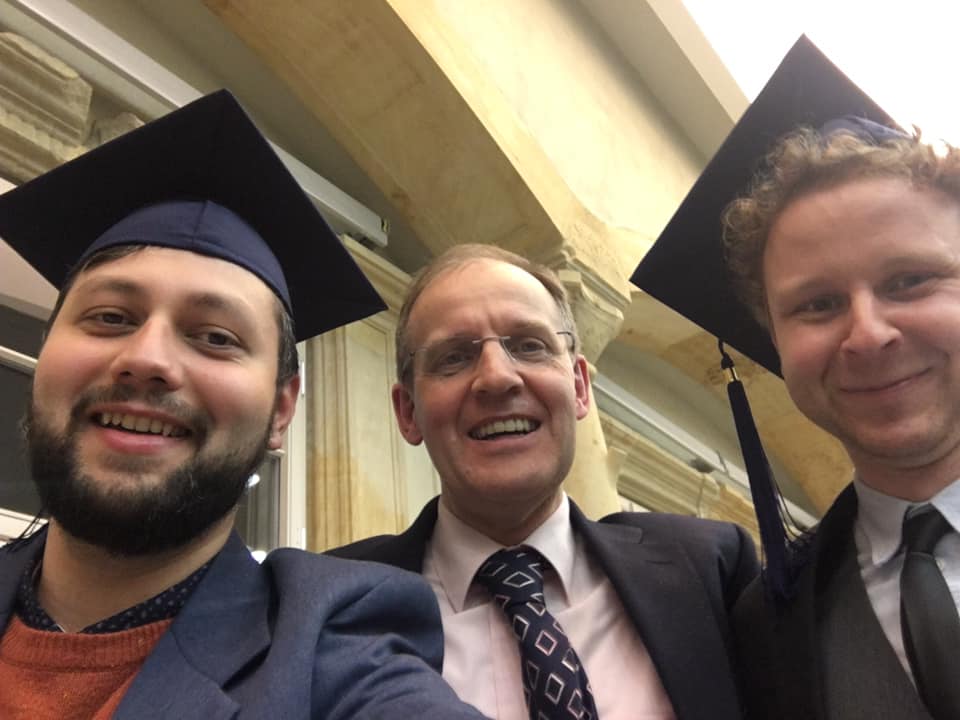
Újkor.hu: What happened after you obtained your doctoral degree?
Csaba T. Szabó: What followed was a roughly one-and-a-half-year period that could be described as “freelance,” during which I attempted to reintegrate into the academic circuit. This is a significant challenge for many researchers who complete their doctorates abroad: reintegration is difficult without an appropriate institutional framework. The idea of “bringing back researchers working abroad” is both noble and important, but without well-structured programs it is difficult to implement effectively.
During this period, I worked in journalism and participated in various cultural projects. It was a valuable experience, but not an easy time. In 2018, I moved to Sibiu, where I taught for three years. This posed a considerable challenge, as I was teaching in Romanian, a language in which I had no prior teaching experience; however, I gradually adapted. This period, too, proved instructive, although three years ultimately felt sufficient.
Subsequently, I was awarded an NKFI postdoctoral research grant, which brought me to Szeged. One of the reasons for this move was that postdoctoral opportunities in Romania remain significantly more limited than in Hungary. Although criticisms of the Hungarian academic system are frequently voiced, there are certainly more unpredictable systems. In Romania, postdoctoral opportunities tend to fluctuate considerably: when EU funding becomes available, numerous calls suddenly open, only to disappear again for years.
The period between 2016 and 2018 was also politically turbulent in Romania, marked by public demonstrations; research funding was not among the priorities. At that point, I essentially faced two options: to return abroad—Germany, for instance—or to move to Hungary. Out of nearly twenty applications, only one or two proved successful: a shorter-term opportunity in Germany and the position in Szeged. This is how I eventually came to Szeged, where I have been working since 2021.
Újkor.hu: How did the Lendület application come about?
Csaba T. Szabó: In 2022, when my previous grant came to an end, I began considering new opportunities. Over the past decade, I had accumulated a substantial body of material—already during my doctoral research I conducted extensive fieldwork in Alba Iulia and Rome—so I had a source base that could sustain research for many years. In addition, my professional network had significantly strengthened, both in Hungary and Romania and internationally, which gave me the confidence to apply for a larger-scale grant.
Such an undertaking typically rests on two main pillars: first, a strong and underexploited corpus of sources; and second, the identification of clear research gaps. In the case of the Mithras cult, for example, no comprehensive catalogue of the material has been produced since the 1960s, meaning that even at the level of basic research there is still much to be done. At the same time, there are methodological approaches—such as the sociology of religion, reception history, analyses of the relationship between antiquity and the early modern period, and the Renaissance reinterpretation of the cult—that have already emerged in Western scholarship but remain largely unexplored in Central and Eastern Europe, particularly with regard to local material.
I applied for three consecutive years, and it was the third attempt that proved successful. Writing such a proposal is always highly demanding: it is not a continuous process, but rather involves one-and-a-half to two months of intense, concentrated work each year, often at inconvenient times—for instance, when calls are announced in mid-December and deadlines fall in mid-February.
The language of the application is also highly specific. It requires a kind of “meta-language”: one must compress thirty to forty subsections into ten pages. This means that everything must be summarized in extremely concise text blocks—sometimes no longer than half a page, or even a quarter page—while still conveying all essential information. In addition, one must confidently employ the specialized language expected in EU grant applications, which in itself constitutes a significant challenge.
Overall, the preparation period was far from easy, but in the end the proposal came together successfully.
Újkor.hu: First of all, congratulations—this is truly an outstanding achievement. What I think will particularly interest our readers, however, is what you plan to accomplish within the framework of the project. What will be created under your direction? What will be available to read, to consult, even to hold in hand?
Csaba T. Szabó: The project is structured around four main pillars, or rather four interconnected research themes.
1. Basic research and data collection.
The first component is the foundational research already mentioned: through extensive fieldwork, we will collect the entire corpus of Mithraic material from the Danubian provinces and Central and Eastern Europe. This includes the two Pannonias (Inferior and Superior), Moesia (present-day Serbia and Bulgaria), and the province of Dacia. Dalmatia has not been included, as a parallel project is already underway in Vienna, though we are collaborating with that team.
Our goal is to create a digital database. By the end of the fifth year, it will be open access and available to anyone—essentially functioning as a virtual museum. Users will be able to browse objects, accompanied by photographs and, in some cases, 3D models. No such comprehensive collection has been undertaken since 1960, and never in digital form. The last printed catalogue was compiled by Maarten J. Vermaseren, who single-handedly assembled the material of the entire Roman Empire—an extraordinary achievement.
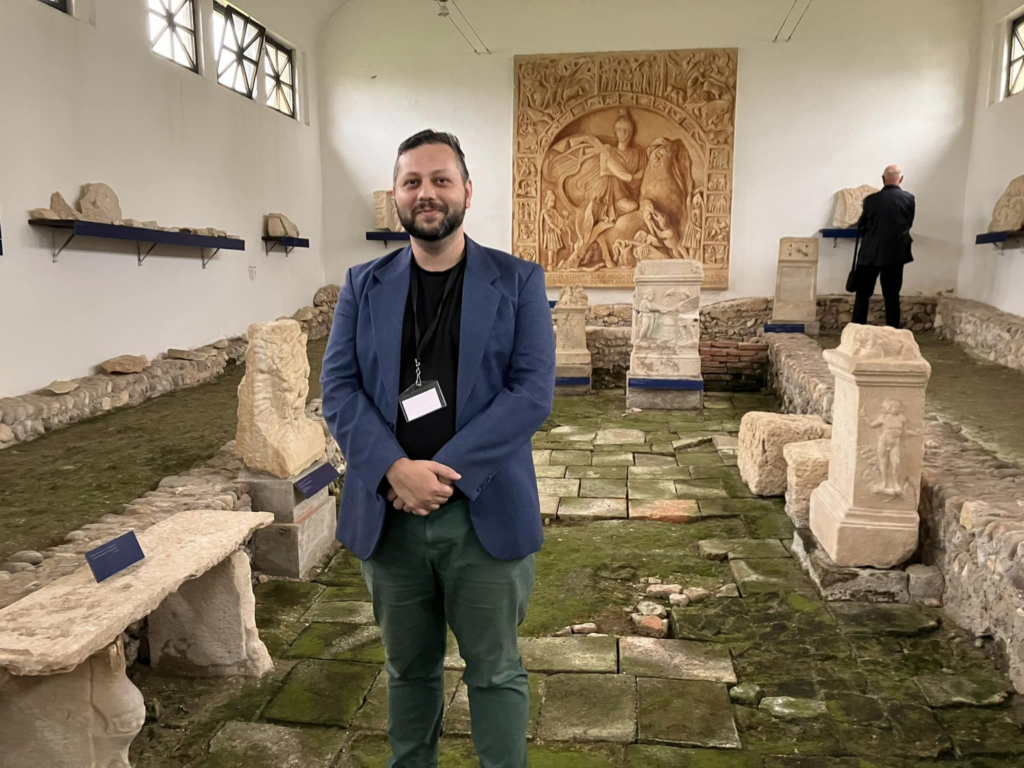
One of the project’s key institutional partners is the Aquincum Museum, which holds one of the richest Mithraic collections in Central Europe. Six sanctuaries have been discovered in the area of Aquincum and Óbuda, the most recent as late as December 2023. This recent find underscores the project’s timeliness. Mithraea are uncovered roughly every forty years in Hungary, and they remain rare even within Central Europe; currently, forty-seven sanctuaries are known in the region. Another major partner is the museum in Deva, which preserves the material from Sarmizegetusa—still one of the largest Mithraic assemblages in Europe. A central aim is the digital documentation of these finds, including high-quality photography and 3D modeling of representative objects.
2. Historical and sociological analysis of religion.
The second pillar focuses on the historical and sociological analysis of religion. Two edited volumes will be produced: one devoted to the Mithraic cult in Pannonia, and another addressing the Danubian provinces more broadly. These will be collaborative works, involving both members of the research team and international scholars with whom I have worked over the past fifteen years in Erfurt, Rome, and elsewhere. At present, four major Mithras-related projects are underway in Europe. One, based in Paris under a Marie Curie framework, examines the “Persian” aspects of Mithras; another in Vienna focuses on Dalmatia; and a recently completed project approached the cult from a cognitive science of religion perspective. In contrast, our project adopts a more empirically grounded, object-based approach. We aim to understand who the members of the cult were, what regional specificities can be identified, how Danubian practices differed from those in Rome, and how the cult functioned at the level of local communities.
3. Reception history.
The third pillar examines reception history. As a living religion, the cult of Mithras disappeared by the fifth century—indeed, in many places already during the fourth. However, it was rediscovered during the Renaissance, and this reception continues into the present day. In Central and Eastern Europe, this trajectory can be traced from the Renaissance onward. Within the project, we investigate who wrote about Mithras from the early modern period to the present, and in what ways. As part of this work, we are preparing a Hungarian-language sourcebook that will make a range of Renaissance and early modern texts accessible for the first time. These are not necessarily the most famous authors, but rather historians, theologians, antiquarians, and early figures in Hungarian archaeological scholarship, many of whom remain little known even within the field.
4. Contemporary, popular-cultural, and public archaeology dimensions.
The fourth pillar addresses the contemporary dimension of the Mithras cult, including its presence in popular culture and public archaeology. We are interested in how an ancient cult can be presented within modern museology to a broader audience—how a meaningful dialogue between scholarship and the public can be established. One aspect concerns museum practice: Hungarian scholarship in this area remains relatively underdeveloped, particularly regarding the presentation of religion to non-specialist audiences. A key question is how religious themes can be made engaging and interactive in museum settings. A good example is the Mesopotamian exhibition of the Szépművészeti Múzeum, which also emerged from a Lendület project.
Another dimension is the study of contemporary neo-pagan phenomena. While modern Mithraism has few adherents in Hungary, a small community did exist in the late 1990s and early 2000s. In Western Europe and especially in the Anglophone world, however, modern Mithraism has a surprisingly larger following. We analyze these groups from a sociological perspective: how they reconstruct liturgy, what objects they use, and how their practices differ from ancient ones. These are, of course, reconstructed traditions—largely twentieth-century phenomena—but they represent an important contemporary layer of reception.
This component will also include a YouTube and Spotify channel, where the broader public will be able to access lectures, discussions, and interviews with researchers and specialists.
Digital bibliography
Returning to the first pillar, data collection will also involve the creation of a comprehensive digital bibliography. Although the number of Mithraists was likely small relative to the population of the Roman Empire, the cult has generated an enormous body of scholarship, partly due to its character as a mystery religion. To date, no complete synthesis exists. Our aim is therefore to compile the most comprehensive bibliography possible and to process it using data visualization methods, allowing meaningful patterns and insights to emerge from large datasets.
In sum, the four pillars are: data collection, historical and sociological analysis of religion, reception history, and the study of contemporary and public dimensions.
Újkor.hu: This is clearly not a one-person undertaking. Has the research team already been assembled?
Csaba T. Szabó: Yes, the team was largely in place already at the time of application. I applied with a core group already defined. In addition to myself, there are three principal members who will be involved throughout the entire five-year period. Tünde Vágási specializes in epigraphy and classical philology; she will focus on the linguistic and epigraphic aspects of the Pannonian material. Ernő Szabó, affiliated with the University of Pécs and the Janus Pannonius Museum, works on research history and reception, as well as visualization—particularly 3D imaging and digital documentation. Attila Hajdú, a classical philologist, focuses on Renaissance and early modern reception, including the translation of Mithras-related texts.
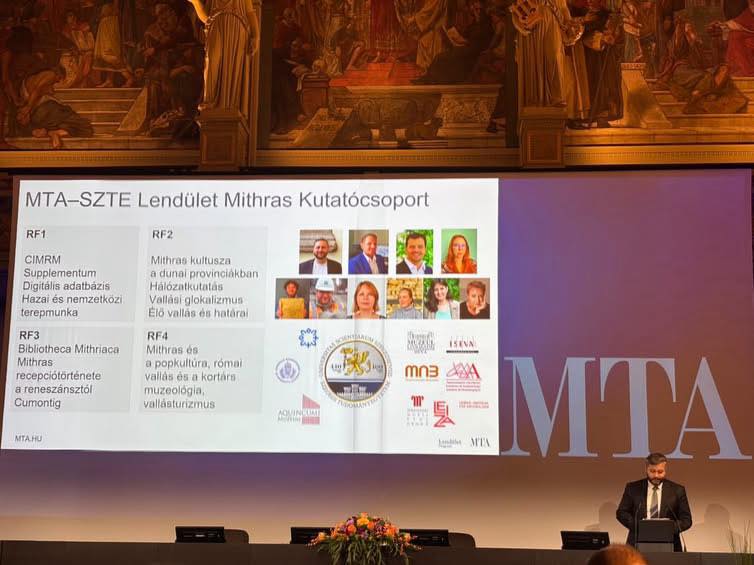
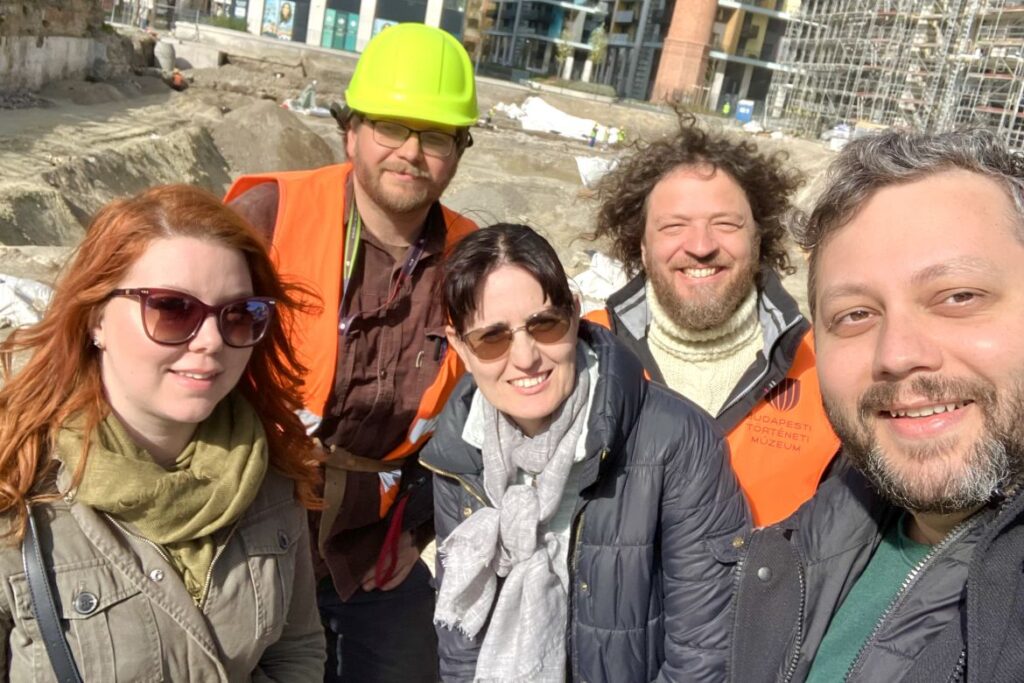
Beyond this core team, there is a broader circle of collaborators who will join for shorter periods. These include archaeologists from the Aquincum Museum involved in the excavation of the new mithraeum, as well as museum professionals and specialists in digital bibliography, sociology of religion, and related fields.
In total, around twenty researchers from six countries—Bulgaria, Slovenia, Serbia, Hungary, Austria, and Romania—are involved, with additional relevant sites in Croatia. Collaboration with local archaeologists and historians is essential at these locations, typically formalized through partnership agreements.
Thus, a network spanning six countries has been established, with a pyramidal structure: a core team responsible for the majority of the work, and a wider group of periodic collaborators. We are planning two smaller workshops and one larger international conference, while also participating in numerous other academic events.
Újkor.hu: Do you think that by the end of the project you will know everything about Mithras that you would like to know, or is this rather a lifelong research endeavor?
Csaba T. Szabó: Unfortunately, we will never know everything. This is perhaps one of the most frustrating aspects of studying ancient religions—and indeed antiquity more broadly: we work with an extremely limited body of evidence. We see only a small fragment of the larger whole.
For scholars of the modern period, this may seem surprising, since events of the twentieth century can often be reconstructed with remarkable precision, yet even there uncertainties remain. In the case of antiquity, however, the limitations are far more fundamental.
For example, methods from the cognitive science of religion are difficult to apply: a contemporary researcher can conduct fieldwork, spend months within a community, apply anthropological methods, even carry out physiological measurements during rituals. An ancient historian, by contrast, cannot do any of this. We cannot access the inner experiences of ancient individuals, their emotions, or the everyday functioning of sanctuaries. We do not know whether they had fixed religious calendars, how frequently they gathered, or precisely how rituals were performed. In many cases, we must infer from material remains alone, and these everyday, practical dimensions largely remain hidden.
At the same time, I hope that in the future it will be possible to develop larger international projects—perhaps on a European scale—that would examine the material in its entirety. Even in countries such as Germany, France, or Spain, the evidence has not been fully systematized. There are local studies and dissertations, but a comprehensive, pan-European undertaking could yield significant new insights.
Such a project need not focus exclusively on Mithras, but could also address the local, everyday, “vernacular” dimensions of Roman religion—an aspect that has only rarely been explored from an archaeological perspective. So there are certainly further plans; whether they will be realized remains to be seen.
interview made by Zoltán Oszkár Szőts