
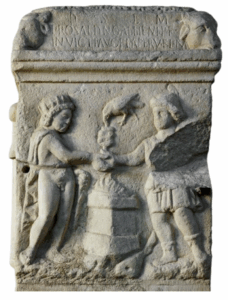
 The rich archaeological, epigraphic, and figurative remains of the Roman cult of Mithras are among the most spectacular exhibits in the museums and archaeological parks of Central and Eastern Europe. At the same time, the cult was also one of the defining, empire-shaping phenomena of religious life in the Roman Empire, whose influence can still be clearly seen in its Renaissance and contemporary afterlife.
The project entitled “REMITHRA: reinventing Roman Mithras. Materiality and appropriations of a Roman cult in Central-Eastern Europe” aims to map and digitize the entire Mithraic epigraphic, figurative, and archaeological material of the middle and lower Danube provinces (Pannonia Superior, Pannonia Inferior, Moesia Superior, Moesia Inferior and Dacia) using contemporary tools, to examine the glocal characteristics of the cult’s ancient social mobility and living religious aspects, its reception history during the Renaissance and European Enlightment, its impact on contemporary museology and modern, neo-pagan religious movements and popcultural phenomena. In the first two years of the project, the team will work in several countries (Hungary, Romania, Slovenia, Austria, Serbia, Bulgaria), where the Mithraic material of the above-mentioned provinces are preserved with several local institutions (see partners). The expected outputs will be digital (see databases and data visualisation), audio-visual (see youtube, spotify pages) and printed (see publications).
For the first time, the project uses an interdisciplinary methodology to examine the cult of an ancient deity, its archaeological and literary sources, its contemporary reception history, and its museological aspects through basic research on case studies that are new or in need of reinterpretation.
Academic disciplines involved: history of religions (religious studies), Roman provincial archaeology, classical philology, historiography (reception history), network studies, digital humanities, epigraphy, cultural studies.
Host institution: University of Szeged, Department of Religious Studies (Egyetem utca nr. 2, 6722 Szeged)

Supporting institution: Hungarian Academy of Sciences (MTA)
Budget (2025-2030): 159.500.000 forint (417.860 euro)